Custom Rubber Parts: From Design to Mould
November 25, 2026
Custom Rubber Parts: From Design to Mould
How to turn a project into a mould for rubber and silicone components
Manufacturing custom rubber and silicone components involves much more than simply making a mould. Each project must be assessed by considering the component geometry, material, dimensional requirements, moulding technology and production volumes.
For moulders, choosing the right partner for mould design and manufacture is a key step in achieving high-quality components and an efficient production process.
1. From the Initial Concept to the Technical Drawing
Every project starts with a technical drawing, a 3D model or a sample of the component to be manufactured.
At this stage, it is important to assess:
Component geometry and dimensions.
Wall thicknesses, undercuts and design details.
Required dimensional tolerances.
Material to be used and elastomer properties.
Expected quantities and production requirements.
A preliminary technical assessment helps identify potential issues and define the most suitable solutions for mould manufacture.
2. Mould Design
The mould design must be developed according to the component and the intended moulding process.
The choice of technology — injection, compression, transfer or injection-compression moulding — affects the mould configuration, feeding system, temperature control and part ejection.
Details such as the number of cavities, parting line, vents and feeding systems can also have a significant impact on component quality and production efficiency.
3. Materials and Moulding Technologies
Mould selection must take into account the compound being used and its specific properties.
The most common materials include:
Natural rubber.
EPDM.
NBR.
FKM.
Silicone.
Liquid Silicone Rubber (LSR).
Each material behaves differently during moulding and requires appropriate design solutions. Knowledge of different compounds and processing technologies makes it possible to develop moulds that meet specific production requirements.
4. From Manufacturing to Testing
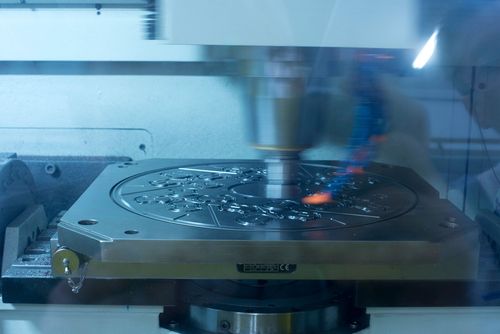
After the design stage, the mould is manufactured using precision machining processes and subsequently tested through moulding trials.
Testing makes it possible to verify the quality of the components produced, process repeatability and correct mould operation.
Any necessary adjustments and optimisations help improve the results before production begins.
5. The Value of a Specialist Partner
Working with a mould manufacturer with specific expertise in rubber and silicone means having access to know-how that supports the project at every stage: from the initial assessment and design through to manufacturing and testing.
OR.P. Stampi S.r.l. is an Italian company with over 45 years of experience, specialising in the design and manufacture of precision moulds for rubber, elastomers and Liquid Silicone Rubber (LSR).
Its experience with different moulding technologies enables the development of customised solutions for technical components and industrial applications.
FAQ – Frequently Asked Questions
Can a mould be manufactured from a 3D drawing?
Yes. A 3D model is a useful reference for analysing the component and developing the mould design. However, it is also important to check the material, tolerances and production process.
What information is needed to request a rubber mould?
A technical drawing or 3D model, the intended material, estimated quantities and the main component specifications are all useful.
Can moulds be designed for silicone and LSR?
Yes. Moulds for conventional silicone and Liquid Silicone Rubber (LSR) require specific design solutions, which must be defined according to the material and production process.
From the Drawing to the Mould Design
Do you have a rubber or silicone component to manufacture? Share your technical drawing or 3D model with OR.P. Stampi so we can assess the most suitable solution for its production together.